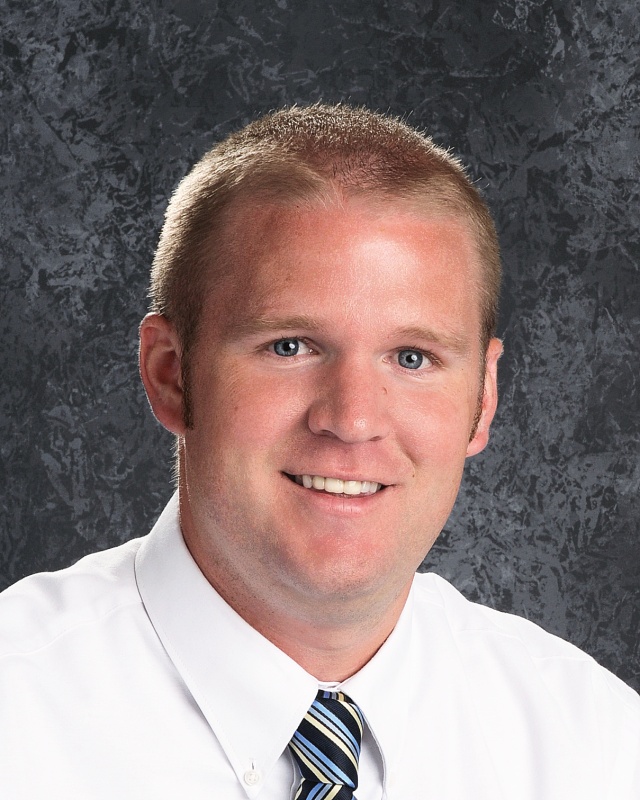
Benjamin Bain, MS Ed

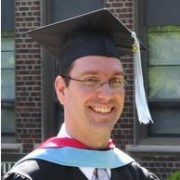
Benjamin BainAsk 2010 MS Ed graduate Ben Bain what makes his work as principal and teacher at St. John’s in Red Wing, MN, special, and he’s likely to say, “The people I get to work with really make this a special place, and that’s been a real privilege.”

In fact, the congregation, parents and faculty have supported his graduate studies in various ways. The congregation helped pay for some of his credits. Ben adds, “People have said things to me like, ‘It’s good that you’re doing that.’”

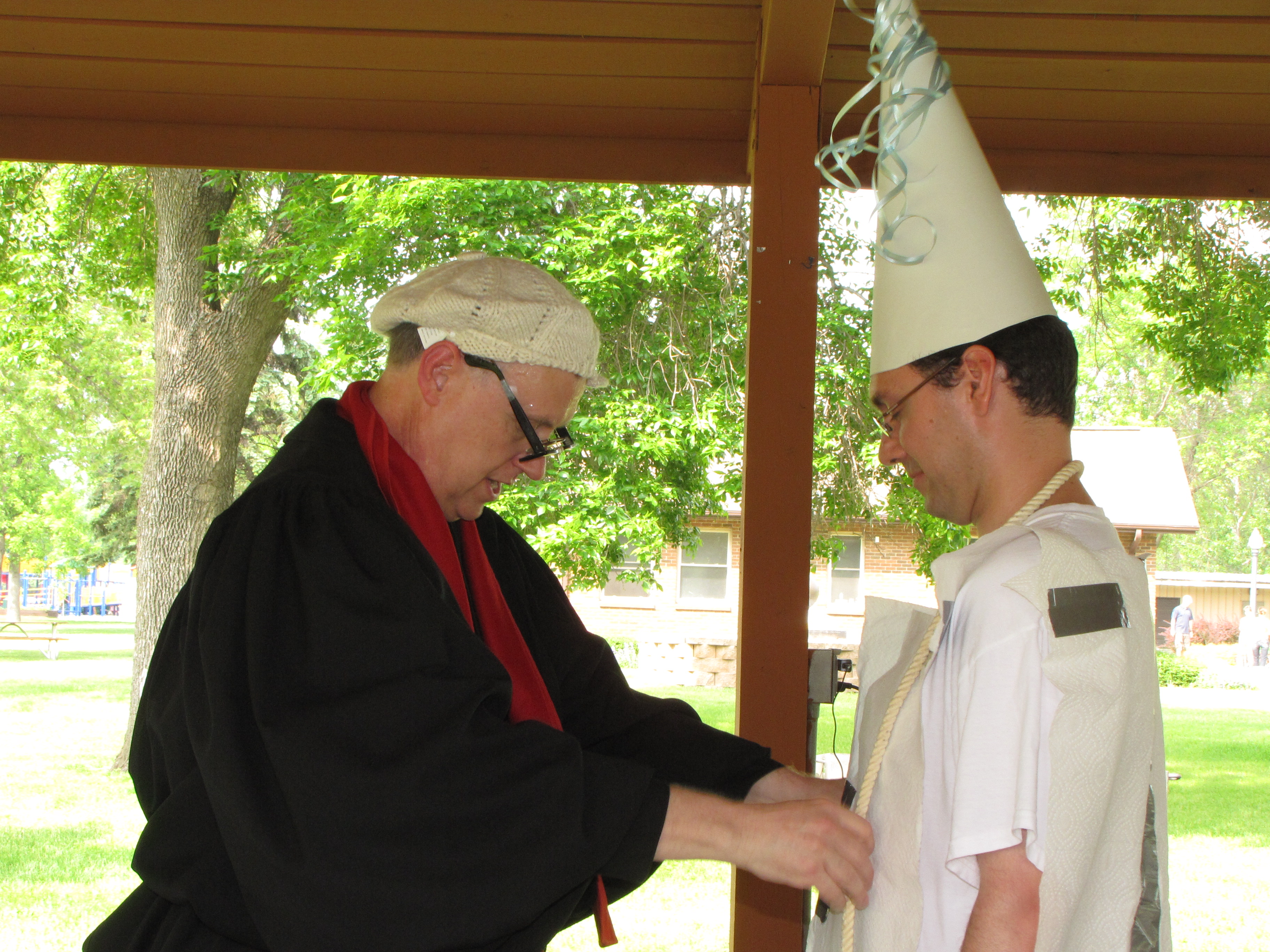
When Ben received his diploma in May 2010, the people he serves celebrated with him. The congregation honored Ben with a reception. In a separate party his pastor, faculty, and staff held a “mock” graduation ceremony. “The party was a bit crazy,” wrote Ben. The pictures show Pastor Loren Lucht in his “regalia” awarding Ben (dunce cap) while the faculty looks on.

Why did Ben choose to get his master’s degree? “I just felt like there was so much more to learn.” He asked himself, “How do I hone those skills? What do I need to do to better help the kids learn?” Ben enrolled in the MLC master’s program in the instruction emphasis.

Ben Bain mock graduation 1Ben found that the MLC master’s program helped him reach his goals right away. “One of the first courses I took was about Reading and Language Arts. When I came back, I began to use a number of pieces. There were things that I had tried in the past that didn’t work out, and now I felt more comfortable on how I can approach it so that I’m not cheating the kids of certain things. And yet I’m giving them the opportunity to grow and learn.”

Ben likes to give his students ownership in the curriculum. He related a Science unit on natural disasters in which the students devised their questions and got to pick what they wanted to learn. Ben taught them how to research, cite references and structure their learning. They did the rest and shared what they learned in power point presentations. Why? “They’re finding more information than what there was in the book in the first place, and they’re more interested in it than just, ‘read this chapter in the book,’” says Ben.

This past summer, the enrollment at Ben’s school took a jump. Its reputation for Christian love and academics is well-known, and when a different Christian school closed, many looked to St. John’s. Ben and his school serve as an excellent example of what continuing education for teachers is all about.

Amy Bryant, MS Ed

Amy Schmeling BryantFamily comes first for Amy Schmeling Bryant(’03), but she also wants to serve her church. With God’s blessing, she has managed to balance them both—beautifully.

Amy serves as a preschool aide and Sunday school coordinator at Salem – Woodbury MN. She also started an additional outreach program at Salem called Smart Start. Working as a volunteer, she holds a music class for parents and children ages 0-5 on Mondays, and a toddler class on Tuesdays.

“My joy is seeing all these young people walking through the doors of our church each week with their parents,” she says. “The exposure we have and the relationships we are able to form with the families in the community have been real blessings. I love working with young children. They give all they have, whatever it is they are doing.”

Amy began taking MLC master’s classes in 2009. “In all honesty, I didn’t start out really thinking about getting a master’s. I took the first class because it was something that interested me. After that I just kept going, and now I’m two classes from finishing my degree.”

Amy chose the Instruction emphasis for two reasons: family and church, not surprisingly. “I wanted to be able to use what I would learn with my children at home,” she says. “And I wanted to be able to be a resource to our church and the ministries we were looking to pursue in the future.”

As far as family is concerned, Amy says her two boys have served as guinea pigs for various new ideas she’s learned—“and very willingly, I might add.”

Her ministry at church and school has been affected by her professional growth as well: “I think it is important to be educated on the changes happening in teaching and instruction today. Knowing about the different methods used around the country helps the preschool program to be as strong as it can be, so that nothing stands in the way of the gospel message we want to proclaim.”

The format of MLC’s program worked well for Amy. “I love the flexibility that the program gives me as a mom,” she says. “I fit the work into the busy schedule we have as a family and am able to work at it when my boys are busy doing other things or after they’re in bed for the night. Of course there are times when that isn’t enough, and my family has been really supportive of the time I spend ‘doing my classwork,’ as my boys would say. It has been pretty neat for them to see that mom still has things to learn too.”

Studying with fellow believers has also been a blessing. “I think the strength that this program provides spiritually has been a huge impact to my faith. I’ve grown in my own understanding of the grace of my Savior. And hearing struggles and joys that other teachers around the country have is so meaningful. It brings everyone together in the work they are doing and encourages people to grow in their abilities because they are working for the Lord.”

The family and church balancing act continues for Amy. While she works on her final master’s courses, her husband, who is a U.S. Air Force pilot, is sometimes deployed, and her two boys keep her very busy. “I love spending time with my family,” she says. “I love seeing my two boys learn new things and play together. We love hiking and exploring as a family and finding new places in the area that we haven’t been before. We also love airports and traveling, and feel comfortable hopping on a plane and heading across the country! My oldest son took his first flight at 16 days old, and since then he probably has over 100 take-offs and landings to his name!”

When her husband returns from his most recent deployment this summer, the family will move to Onalaska, Wisconsin, near La Crosse. And Amy will continue to study. “At the beginning of every class I take,” she says, “I am always nervous about the time I have to commit in order to get out of the class what I’d like. Then I read the introductions of everyone else in the class, and they are just as busy and just as anxious about spending time at their ministries and with their families. Somehow we all make it through.”

As she packs boxes, she says, “I am excited to get involved with the ministries at our church in Onalaska. I know that God has a plan for how I can serve in our next stage in life.”

(Article written by Laurie Gauger)

Rachel Burgess, MS Ed

Rachel Burgess Preschool Director Trinity-CaledoniaJuly 8, 2010, was an important day for Rachel Perry Burgess ’02. She handed her comprehensive examination to Director of Graduate Studies John Meyer, marking the culmination of her graduate work at Martin Luther College.

Emphasis: Of the three emphases—instruction, special education, and leadership—Rachel opted for leadership because the classes seemed most applicable for her work as an ECE director. She says she didn’t necessarily start out trying to get a degree, but just wanted to take courses that were interesting and practical. (Cognitive psychology is just one of the courses she really loved.) When she realized she was well on her way to her degree, she decided to finish the program.

Her call: Rachel is currently the director of an ECE at Trinity-Caledonia WI, where she teaches children ages 3-5 five mornings a week. Previously, she served in ECE ministries in Baton Rouge LA, La Crescent MN, and Inver Grove Heights MN; as a kindergarten teacher in West Allis WI; and as director of a KinderCare Learning Center in Brookfield WI. (Why so many places? As the wife of a seminary student and new pastor, she moved quite a bit.)

Flexibility: The flexibility provided by the online facet of the program was important to Rachel. “I knew I’d be moving three years in a row, so it was good to have it online, because I could do it anywhere. It was nice to be able to work on Saturdays. My husband is a pastor, so he’s busy on Saturdays, and I could set my schedule according to his. Also, if we were planning a camping trip, I could work ahead. I also worked at the YMCA till 10 pm, and I could work online after that or early in the morning.”

Community: She also appreciated the online community. “Almost every course starts with introducing yourself. Profs make sure that everyone is communicating and working together. And most students had a WaterCooler line on Moodle, which is for more personal things: carpools, recipes, baby news, calls, that sort of thing.”

Applicability: “The projects weren’t just assignments. They were applicable right away. And most of the profs were open to you tweaking the assignments to make sure that they fit your situation.

“My courses on assessment and administration were directly applicable. I immediately made small changes in my class the very next day, and now that I’m done with the program, I want to go back through my notes and see what I want to implement first. There are so many things, but which do I want to do first?”

Variety: Some may wonder whether coming back to MLC means they’ll just get more of the same. Rachel says, “No! I only had one of these profs before—Dr. Menk. Everything changes. You have a variety of people with different pasts, including profs from WLC and profs who’d never even set foot on the MLC campus before. There’s a variety of new methods and perspectives—and even the content is different. The profs are not teaching the same thing you learned in undergrad work.”

Rigor: “People who’ve taken courses elsewhere say that MLC courses are harder, but I don’t think that’s a bad thing. I didn’t feel overworked, but I did have to work. It stretched me, and there were times when it was a lot, but it is a master’s program.”

Professional growth: “The biggest change in my ministry would be that I have a better communication system with the families and communities I serve. Open-ended communication with parents affects so many things. I’ve also found that parents are looking for their children’s teachers to be seeking more education.

I’m an ECE director, but I don’t have any children, which is a stumbling block for some parents. So for me to be able to tell parents that I have my master’s degree—that’s a marketing tool. Parents are looking at the teacher’s education and the school’s accreditation. It gives credibility.”

Timothy Gustafson, MS Ed

A Second Master’s Degree—Totally Worth It!

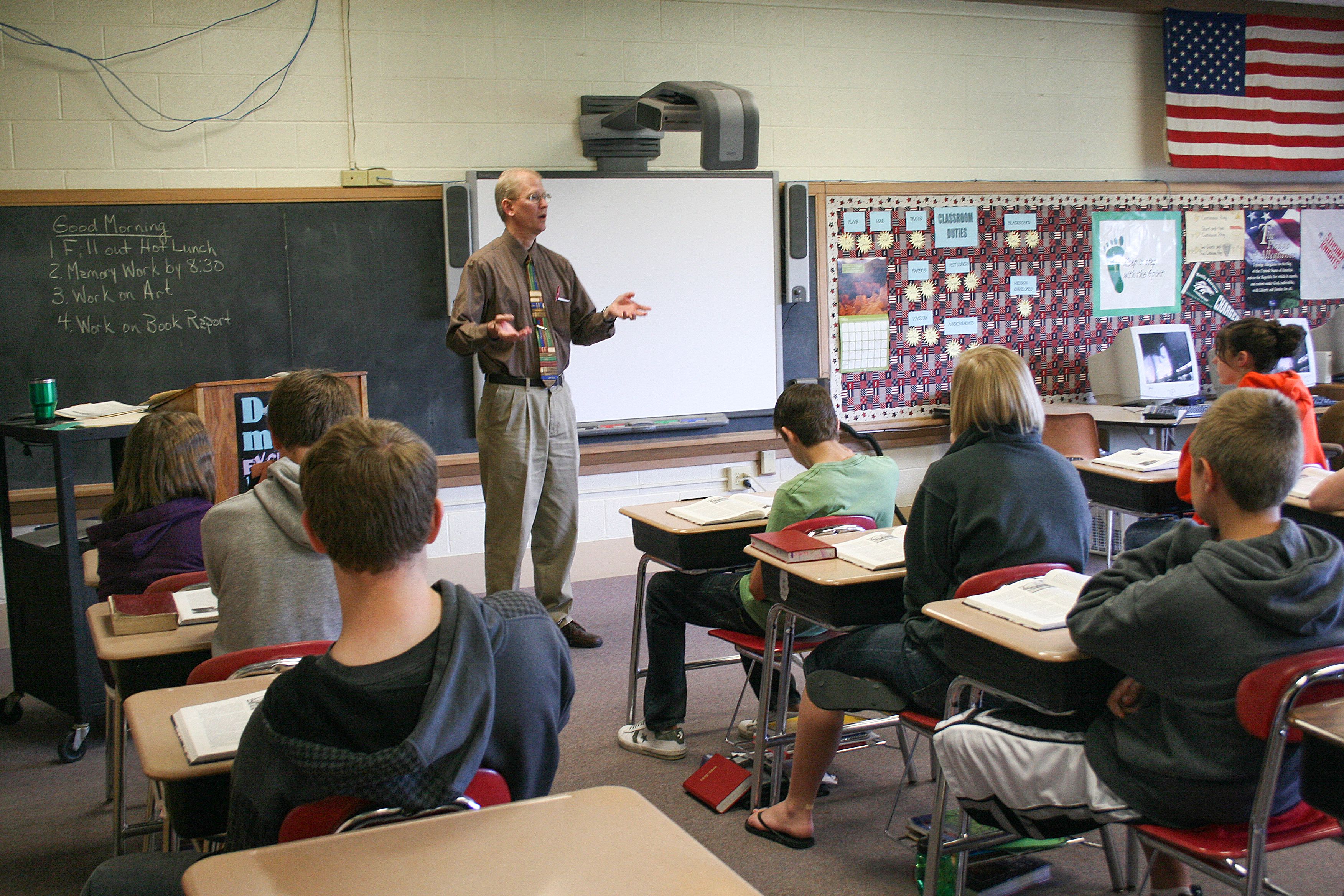
Tim Gustafson Teaching 8th gr. Room 1 (1) (1)Twenty-two years ago, Tim Gustafson DMLC ’83 earned a master’s degree in education from Viterbo University. Last May he earned a second master’s degree, this time from MLC.

Why another graduate degree?

Mr. Gustafson says he enjoyed studying for his first master’s degree and saw how it made him a better teacher—a profession he loves. “For the past 31 years, I’ve really enjoyed being in the classroom each day with my students. It gives me the opportunity to see them learn new things, and I enjoy sharing the Word with them.”

When he transitioned to the call of principal, he knew he had more to learn. “The role of the principal is changing, and I needed a stronger background in administration.” Although another principal early in his ministry had served as a good role model, Tim wanted to take more coursework too.

The problem was time. As principal and grade 7-8 departmental teacher at David’s Star-Jackson, Wisconsin, his time was at a premium. “I’m in the classroom two-thirds of the day, and the other third I’m working on my administrative duties. My biggest challenge is finding the time to do everything and do it well. I couldn’t find a master’s program that fit my schedule,” he says.

The MLC program sounded good, with its flexibility and convenience, but he was hesitant about taking all his classes online. It wasn’t until a colleague finished the program and told Tim it would really benefit his ministry that he decided to take the plunge.

“It didn’t take very long before my concerns about working online were put to rest,” he says. “The online format allows for flexibility with your time, which works perfectly for a busy WELS teacher. I could work on my assignments early in the morning or late at night.”

Tim was pleased with the content as well. The instruction courses showed him many ways to improve his teaching and assessment, and he successfully incorporated them into his classroom. The leadership courses helped him better understand his role as a principal. “I think that’s helped me do a better job of working with curriculum and leading my staff,” he says.

But it was the scriptural foundation of the program that really made it worthwhile. “Everything in the classes was focused on God’s Word and how we can further his kingdom. I like taking classes with other WELS teachers because my faith is strengthened as I work with them. We generally come from similar backgrounds and work in similar situations, so it’s a great way to exchange ideas.”

Mr. Gustafson is grateful to David’s Star congregation for their encouragement, prayers, and tuition reimbursement. “If I wouldn’t have had this support from the congregation, I wouldn’t have been able to complete my master’s,” he says.

And he also wants to encourage other teachers to enroll in the program, just as his colleague first encouraged him. In fact, his son Phil has already taken his advice to heart and is enrolled in the program now. Tim says: “Don’t wait to get started! At the beginning it seems like a long process, but the classes are well worth the time and effort. The faculty was great to work with and was very encouraging along the way. It’s a great way to improve your God-given talents, and your ministry will really benefit.”

More on Tim Gustafson DMLC ’83, MLC ’14

Wife: Rachel DMLC ’83, grade 2 teacher at David’s Star

Four sons: Philip (27) MLC ’09 teaches at St. Mark-Eau Claire, Wisconsin. Phil is also in MLC’s master’s program. Stephan (24) works and lives in Wausau, Wisconsin. Jacob (22) is a senior at WLC majoring in business finance. Caleb (16) is a junior at Kettle Moraine LHS.

Hobbies: golfing and reading history and historical fiction

Aaron Hartwig, MS Ed

First MLC “Master”

Aaron Hartwig St. Paul-North Fond du Lac WIAaron Hartwig was the first student to enroll in MLC’s Master of Science in Education program. A decade later, we caught up with him. Did the degree make a difference in his ministry?


“There’s no doubt in my mind,” he says, “that I’m a significantly better principal and classroom teacher as a result of it.”

Aaron Hartwig MLC ’02 had been out of school only a couple years when he wanted back in. “I was eager to earn my master’s degree because, as a novice teacher, I realized I was far from mastery. The master’s program was a means to invest in myself, so that I could better serve those with whom I was called to share the gospel.”

He could have gone almost anywhere for that advanced degree, but he chose MLC. “Since there’s nothing I do that’s more important than sharing the gospel, MLC’s program seemed a natural fit. I was comfortable knowing I’d be instructed by individuals who were experts in their fields and who understood WELS ministry. It also appealed to me to study alongside my WELS peers.”

He graduated with his MS-Ed (Leadership emphasis) in 2008, along withBrett Kriese DMLC ’95—the first two to wear the MLC master’s hood. Since then, 71 have worn the hood, and another 134 are currently enrolled.

Looking back, Aaron says: “The program met and exceeded my expectations. I left the program comfortably immersed in the latest educational trends and terminology. Now I thoroughly enjoy my role as my school’s administrator, continuing to evaluate educational trends and determining how they can best be used to achieve academic excellence at my school.”

In 2009, Aaron accepted a call to serve as principal and grade 7-8 teacher at St. Paul-North Fond du Lac WI. Although he works with a significantly larger faculty and student body, the heart of his ministry remains the same, he says: “sharing the gospel with souls who desperately need to hear it.”

And he carries his education with him. “Without a doubt, I apply the things I learned at MLC each and every day, during both my classroom and my administrative time.” He also pays it forward. “I’ve discovered that I enjoy incorporating professional development components into my faculty meetings, so I can continue the beneficial dialogue found in a professional learning community.

“Undeniably,” he concludes, “the education I received at MLC has been a daily blessing for me and those I serve.”

And just to put the icing on the cake, he explains that he recently signed up for another MLC graduate course, Google Technologies in Education. “I suppose that’s evidence of me ‘putting my money where my mouth is’ as I advocate the blessings of MLC’s program to others!”

Chris Hintz, MS Ed

reducedChris Hintz Graduate NewsletterWhen Chris Hintz graduates this May with his MS-Ed, he’ll walk off the stage with far more than a diploma. He’s gained skills and insights that have strengthened his God-given leadership gifts and greatly benefited his ministry as principal.

The office of principal has called out to Chris since his graduation from MLC in 2004. At Zion-Denver, he served one year as vice principal and grade 7-8 teacher before stepping into the principalship and a grade 5-8 classroom. At Emmaus-Phoenix, he taught grade 5-6 and handled the athletic director duties for three years; then he and the principal, with the blessing of the board and congregation, switched roles.

Principals across the synod will nod in understanding as they hear Chris describe his normal day: “It starts before 5:00 am and usually ends around 9:00 pm. I study God’s Word with my faculty in the morning, give knuckles or elbow bumps to students in the morning and tell them to have a great day, teach my 7th-8th graders, answer emails, return phone calls, attend meetings, build and foster relationships with parents and students, complete administrative responsibilities, correct and point students to their Savior when sin gets the better of them, carry out ministry with my faculty, coach my teams, administer the church and school technology, occasionally unclog a toilet or mop a floor, play games with my students at recess, and, most important, daily point the students at Emmaus to their Savior.”


MLC’s master’s program, with a leadership emphasis, has given his already-strong ministry an additional boost. “The impact of master’s classes on my ministry has been immeasurable,” he says. “I was able to implement many ideas and skills in my classroom immediately after I learned them.”

He cites three specific courses. In his Educational Leadership course taught by Dr. Michelle Abrego, he wrote a writing curriculum that his faculty now uses to teach students the writing process and prepare them for high school writing. The class also afforded opportunities for deep discussions on the traits of great principals. In Supervision of Instruction taught by Dr. Robert Klindworth, he discovered his personal supervisory philosophy and explored how he would implement it at Emmaus. And in his Behavior and Emotional Disabilities class taught by Professor John Juern, he created an Emergency Procedures Plan, a document that was referenced in the WELSSA accreditation process Emmaus was pursuing at the time.

In fact, many assignments in the master’s program helped Chris lead his school through the accreditation process. They earned Exemplary WELS School Accreditation status in March 2014.

The entire master’s program, he says, “has opened my eyes to all the new and different ways to teach and learn and has made me excited to continue improving the education offered at Emmaus.”

Because new educational theories are always being introduced, continuing education is crucial, he says. “Some new educational theories are good; others actually do a disservice to a student’s education. I don’t know which theories are helpful and which are not if I don’t continue to study, practice, and fine-tune the education I’ve received.”

Chris encourages all teachers and principals: “Go sign up for the master’s program! God will give you the time, money, energy, and everything else you need to complete it. You will grow personally as an educator, you’ll become aware of blessings you never knew God gave you, and you will become even more of a blessing to your congregation and school with your new knowledge, improved skills, and zeal to strengthen and improve your school.”

All about Chris Hintz

Family: Wife, Nikki (nee Jaeger), Kaden (age 7), Kirsten (age 5) and new baby (due October 2014) 

Ministry history:

2002-03 Shepherd-Albuquerque NM: grade 4-5 emergency teacher

2003-04 MLC: senior year and graduation

2004-05 Zion-Denver CO: vice principal, grade 7-8 teacher

2005-08 Zion-Denver CO: principal, grade 5-8 teacher

2008-11 Emmaus-Phoenix: athletic director, grade 5-6 teacher

2011-14 Emmaus-Phoenix: principal, grade 7-8 teacher


Hobbies: running; camping; hiking; watching and playing basketball, baseball, and football; computers; technology; photography; reading education books and John Grisham novels.

Sheila Krause, MS Ed

2009 Sheila KrauseTwo brothers with learning disabilities were Sheila Jones Krause’s inspiration. “Working with children who struggle in school in a WELS setting has always been my dream,” she says. As the extended learning teacher at David’s Star, Jackson WI, she does just that, teaching children with learning difficulties and disabilities, as well as teaching grade 7-8 English.

Sheila loves working with God’s children at David’s Star. “The challenge is to find what works for each student, since they are all unique. Each lesson is designed to fit the student’s academic level and learning style, to strengthen their weaknesses, and to teach them the tools that they need to become independent learners. I spend time getting to know each student—inside and outside school. I want the students to know that I am there for them as an advocate with their teachers and parents.”

It takes a lot of time, she says, “but the joys of what I do outweigh the challenges! The joy is when they have achieved something that they have never been able to do before, no matter how small. We celebrate all successes! The joy is there when I see them move on to high school and see them succeed there, too.”

In 2006, Sheila decided to expand her knowledge base by enrolling in MLC’s Master of Science in Education program with an emphasis in special education. “I wanted to be more knowledgeable in finding ways to help my students,” she says. “I wanted to be better prepared for my students’ IEPs with the public school and learn how to work more closely with our public school pupil services departments. I wanted to learn more about different types of disabilities, different types of assessments, and how to write a plan for my students.”

Did MLC’s program meet her needs? Absolutely. “I believe that I am a better teacher because of the classes that I took,” she says. “I have a better understanding of the different types of disabilities and am more confident in working with these students. I have also noticed that the public school district respects what I do at David’s Star due to my master’s degree. I have built a wonderful working relationship with the public school district. Because of that relationship, they are willing to share ideas and programs that work for them and help me use these ideas and programs at David’s Star.”

Sheila spent three years in the program, continuing to teach while doing her own homework—and squeezing in her other interests, reading and stamping. She finished in May 2009.

Looking back, she would highly recommend the program to other WELS teachers. “Being able to choose the classes that best fit your call, the flexibility of completing the lessons and assignments online, and the working relationship with other called workers and the MLC graduate professors are why I recommend MLC’s Master’s program,” she says.

“I liked being able to take classes online while I was teaching,” she continues. “I could set my own schedule, and I was able to choose the classes that best fit the needs of my call. There were so many choices that it was difficult at times to choose one class.

“Many of the assignments were practical,” she adds. “I was also able to have my students participate in some of the projects that I developed. It improved my relationship with both the parents and the students. They were able to see that I was actively trying to help them do better in school. They also liked the fact that their teacher had homework to do, too. I enjoyed the interaction with the other teachers who were taking the class and with the professors. The professors were all very knowledgeable in their area and were eager and willing to share that with all of us. And I know that I can still stay in touch with these professors and continue to ask them questions.”

Rebecca Lindenberg, MS Ed

Lindenberg2As a language arts instructor in the upper grades at St. John-Wauwatosa, Wisconsin, Becky Gohr Lindenberg’s days are always interesting. “I tell my students I have the best job in the whole school, because my assignments aren’t just math problems and multiple choice questions. Every time I assign a paper or essay, I get to read and learn from 60 different individuals who have 60 different ideas and experiences.”

Becky also has a pleasure not every teacher can enjoy: teaching a content-area curriculum she designed herself from the ground up. It’s a fifth grade spelling curriculum she created while a student in the MLC master’s program.

“Writing curriculum has always been really fun for me,” she says. “One of my favorite parts of teaching is the lesson planning. I enjoy researching different ways to reach individual children. I enjoy finding activities and assignments that meet all of the students’ interests and abilities. I love matching my curriculum to the state standards.”

With that love of curriculum driving her, Becky began looking for the right master’s program immediately after graduating from MLC in 2003. Four years later, she found it—back at MLC. “I loved the idea that my classes would be centered on Christ,” she says. “And I absolutely loved my professors while attending the undergraduate program. I always felt like they genuinely cared about my future and took my education as seriously as I did.”

She admits she was a little concerned about the workload. “The demands of a called worker can be very intense,” she says. But she found the MLC professors to be flexible whenever students’ ministries or family lives got stressful. “I cannot tell you how much their sensitivity was appreciated,” she says.

Becky also appreciated the professors’ feedback—“always so thought-provoking and kind”—and the interaction with fellow students. “They were colleagues who had the same struggles, the same kinds of students, and the same issues in their schools,” she says. “I feel like I have my very own network of educators who have shaped who I am as a teacher. And now they’re lifelong friends as well.” Finally, she liked the relevance of the coursework. “I cannot tell you how many times I was excited to go to school so I could try an idea or technique that I had just learned in class.”

She began the program in August 2007 and graduated last May with a diploma and an original curriculum in hand. In fact, that grade 5 curriculum she designed evolved into a grade 5-8 spelling program that is proving very effective for St. John’s students. “It’s very neat,” she says, “when you get to see a project you’ve poured your heart into be so successful.”

Becky Lindenberg

Hometown: Menomonee Falls

High school: Kettle Moraine LHS 1999

College: MLC 2003, elementary education with music emphasis

Teaching career/ministry: Director and teacher at KinderCare Learning Center-Minneapolis (2003-2006); K-2 teacher and athletic director at Crown of Life-Hubertus WI (2006-2009); and upper grade spelling, composition, and forensics teacher at St. John-Wauwatosa WI (2009-present)

Family: Married to Erik, a financial representative for the John Hancock Financial Network; two boys—Joe (8) and Jack (6)

Hobbies: “Cheer on our sports teams, watch the Packers, coach cheerleading, and drink coffee! The best part of living in Milwaukee is being surrounded by friends and family.”

Something special: “I am an accomplished flautist, having played for 22 years. I have studied at the Wisconsin Conservatory of Music and under the direction of professional flute players. I frequently play flute in church as well as perform in free concerts to the general public.”

Favorites: homemade pizza, Jen Lancaster books, Harry Potter books, The Help, Pirates of the Caribbean, daffodils and tulips, Green Bay Packers, the TV program Parenthood, the song “I’m Yours” by Jason Mraz

Written by Laurie Gauger

Jeffrey Loberger, MS Ed

lobergerJeff Loberger (MLC 2003, MLC MS 2012) believes that good schools begin with good leaders.

As a leader at Good Shepherd-Omaha, he wears a number of leadership hats, but, interestingly, not one of them says “Classroom Teacher.”

“I spend my day as principal of our school, development director of our building program, and member ministry director of our congregation,” he explains.

It’s an unconventional, forward-thinking calling that Jeff’s congregation has given him, but then again, Good Shepherd-Omaha is a forward-thinking congregation. And God has certainly blessed their efforts. In Jeff’s first two years there, the school has grown from 68 to 101 students. When some other WELS schools are closing due to low enrollments, Good Shepherd is turning students away due to lack of space—thus, the vision for the addition of classroom and office space, along with updated bathrooms, additional parking, and, further down the road, a new sanctuary.

“We are praying this building project will help us to add more families in our school and church family, thus exposing many more to this wonderful peace we have through God’s Word,” Jeff says.

To accommodate the growth, the faculty of five teachers, which, in 2008, many thought might need to be reduced to four, has now grown to 7.5.

As one of the 7-1/2 teachers, Jeff has the most varied daily schedule. “Every day is different,” he says. “There are days where I am down at city hall filling out documents for waivers and applications for leased parking. The next day, I will be working with various members, discussing gifts and amending wills to give a gift to our building program. The next will be handling discipline of a child or observing one of our classrooms. Sometimes, I get a little of all three of these during the day.”

With so many avenues for leadership, it was important to Jeff that he become the best leader he could be. “If I could learn to become a better leader and visionary for my school, this would greatly benefit the children attending our school. Also, I would hopefully be a better resource for my faculty to come to in times of need. Finally, with greater vision and climate in the school, we would become more of an option for our community families when they look to enroll in quality schools.”

In 2008, while he was serving in Salt Lake City, the desire to be a better leader led him to begin his master’s coursework with a leadership emphasis. He notes that the WELSSA accreditation process and the encouragement of the Salt Lake City congregation were catalysts as well. He will finish the program in 2012 or, if he completes a second emphasis, in 2013.

He says the program has made a dramatic impact: “This program has completely changed who I am and how I operate. I have been a principal for eight years. Since enrolling in this program, I have learned so many practical things to help with time management to classroom observation to curriculum mapping to handling issues with families. These benefits are seen by my wife, who has been by my side the whole way through. She can see the confidence in my way of running and handling school issues.”

Jeff began his ministry as an emergency teacher at Nebraska Lutheran High School (2001-2002). He taught at Immanuel-Hadar NE (2003-2006) and Prince of Peace-Salt Lake City (2006-2008) before being called to Good Shepherd. In his spare time, he enjoys playing men’s league basketball, camping, watching a good comedy, reading nonfiction books about World War II, and spending time with his wife and children.

He humbly admits that he has the gift of gab—and lots of opportunities to use that gift in his many leadership roles. “God has given me the ability to talk! I have no problem talking to anyone, anywhere about our school and church. I get to talk with community families, sharing with them the opportunities they could have attending a parochial school where Jesus is the center of everything we do. I get to help people understand the blessing of giving to church (particularly the building program) and the opportunities this giving will have on our ministry of being able to reach many more people who need to hear the Word. I get the privilege of helping current members find something they want to do to help grow the ministry. I get to see the smiles on their faces during times where they now feel part of what we do here.”

Finally, Jeff notes that leadership is tied to ministry. And ministry is ultimately about souls. “Everyone who is privileged to serve in the public ministry is in it for the souls we serve each day. As we serve, we need to remember we can best serve if we keep up with the changes in standards and techniques that are unique to each generation. As we continue to improve in our methods and strategies as teachers, we will ultimately be improving the output of the children and families we serve.”

And of the many blessings God has bestowed on Good Shepherd-Omaha, Jeff humbly says, “It makes me realize that the Lord can use someone like myself for the benefit of his kingdom. ”

(Article written by Laurie Gauger)

Timothy Mueller, MS Ed

Tim Mueller - PictureServing to the Best of His Ability

Like most WELS principals, Tim Mueller (MLC BS ’06, MSEd ’11) is a busy man. But he feels privileged – overjoyed, in fact – to be so. “My joy is in serving my God to the fullest of my abilities out of thanks and praise for all that has been done for me,” he says.

His day at Star of Bethlehem in New Berlin, Wisconsin, starts early: “Up before the sun, a cup of coffee, me and my inbox,” he says. “Then I begin the school day in God’s Word with my faculty. I greet students and parents with a smile, handshake, or fist bump. I get into God’s Word with my upper graders and just talk about life as Christians in this world. I communicate with the secretaries and enter the office for all things principal.”

The afternoon is spent with students: lunch, recess, math, and English class; and after school he talks with faculty and staff. “I say my faculty and staff because I love them much; they are near and dear to me,” he says.

More office time follows: “emails, phone calls, or face-to-face meetings with any and all stake holders of the school.” Then it’s home briefly for supper and play time with his boys, and back to school to meet with school and church committees—lay people also busy serving the Lord. And finally, he says, “I end the day with my dear wife, without whom my service to the church would not be possible.”

Yes, a busy day, but every conversation, every effort, it seems, is laced with love and joy. “My joy,” he says, “is in knowing there is nothing I have to do, because it has all been done for me. And what’s more, I am given the privilege of telling this to others. Each day I get to tell our Savior’s little lambs about how much Jesus loves them. Each day I get to sit around a table with my brothers and sisters in Christ, and as a team, go and tell the good news of Jesus’ love. And, even more, we get to collaborate and offer an outstanding education as we prepare our students for this life and for eternity. Does it get better?”

Plan out YOUR program!

Or try a course first, and join the program later.

Sign up for GRAD courses now!

You don’t need to be in the master’s program to take a course.

In a way, Tim’s choice to enter a master’s program was inevitable. “Growing up,” he says, “my father always told me I could be a garbage man, McDonald’s worker, teacher, pastor, or anything I wanted, as long as I used my abilities to their absolute fullest to give glory to our God.” As he began teaching, he realized how much he didn’t know. To use his abilities to the fullest, he says, “I knew I needed to keep learning.”

Many master’s programs were available, online and right in La Crosse, Wisconsin, but Tim knew it had to be MLC. “I went into teaching to teach kids about the love of Jesus. I wanted to know how specifically to do that. I knew that at MLC I would learn practical knowledge based in best practices, and it would be centered on the love of Jesus. At MLC I’d learn from experts as instructors and with extremely knowledgeable individuals as peers.”

While Tim was working on his program from 2007 to 2011, he was principal at St. John-Sparta, Wisconsin. “My dear St. John in Sparta took great ownership in helping me financially with master’s program costs,” he says. “They gave freely that I might learn how to serve them and their children to the fullest of my ability. I then took a call to New Berlin. It may be easy to think they’d have negative feelings over the fact that they supported the learning financially and then I went to serve in another location. However, I’m confident that they know it’s not just about the ministry in Sparta, but rather our Lord’s ministry everywhere. I pray that we all, across the United States, might share this perspective.”

Principal Mueller urges other teachers to consider pursuing their master’s degrees, remembering their high calling as Christ’s ambassadors. “Let us ‘use whatever gift [we have] received to serve others, faithfully administering God’s grace in various forms.’ May the love of our Savior and our God’s grace motivate us to continue growing in our faith and in our abilities serving in our various callings – not because we have to, but purely out of love and thankfulness for all that has been done for us.”

Tim is quick to encapsulate the goal of further education: it’s the goal of ministry itself. “It’s all about love,” he says. “Jesus loved us so much he died to save us. It’s as simple as that: faith like a child. Now we go and serve. We serve to the fullest of our abilities out of glory and thanks to him.

“The graduate program at MLC helped me do this. It helped me expand the knowledge and improve the skills God has given me, which he allows me to use daily as I teach his little lambs about this love. Thank you, MLC. Thank you, Lord. To God be the glory.”

Tim Mueller at a Glance
Family: Wife, Megan, and two sons, Timothy III (2) and William (5 weeks)

Hobbies: Being outdoors, golfing, playing with the kids, having a glass of wine with his wife

Media: Books on leadership, communication, teambuilding, and faith; the music his middle school students listen to; kids’ movies (for his sons) and chick flicks (for his wife)

Biographical tidbit: Teaching is his second career. Before MLC, he first earned degrees in business administration and management and worked in resort management.

(Article written by Laurie Gauger)